
Our Services
The Future Is Flexible

Flexible working is no longer a “nice to have” or a problem to solve - it’s a strategic imperative.
Want to recruit the best employees? Be flexible. Want to reduce employee turnover? Foster a culture of flexibility. Want to maintain the highest quality of teaching? Ensure your best talent is incentivised to stick around.
Flexibility should weave into working practices. And school leaders should feel sufficiently emboldened to take advantage of a growing cultural – and political – awareness of the benefits of flexible working practices.
Take a look at the updates made to the School Teachers' Pay and Conditions Document (STPCD) for school teachers in maintained schools. From September, new provisions were introduced to implement flexible working to support recruitment and retention.
Paragraph 89 makes clear that expanding and promoting flexible working opportunities in schools can help to recruit and retain high-quality teachers, improve wellbeing, and promote equality of opportunity in the workforce. Furthermore, flex can suit teachers at different stages of their life – whether for those with caring responsibilities, planning a phased retirement, returning from a career break, combining work in a school with professional development or working in their field of study. Additionally, paragraph 90 emphasises the importance of supporting the working lives of teachers and leaders in modern, practical ways by implementing flexible working, such as part-time working, personal or family days, and off-site PPA time.
While the evidence for embracing flex is compelling*, how can school leaders adopt a strategic, data driven and long-term approach so their people strategy is meaningful and inclusive regardless of their contexts?
Complete a meaningful discovery phase
The discovery or planning stage of your strategy is about leaders establishing their school’s baseline for flexibility, and identifying where they want to be by a specified time in the future.
You can measure this by using the self-assessment tool here Resource Library | Flexible working in Multi-Academy Trusts and schools
This can help you identify where you are at against the categories below. It also provides tips to help further develop your approach:
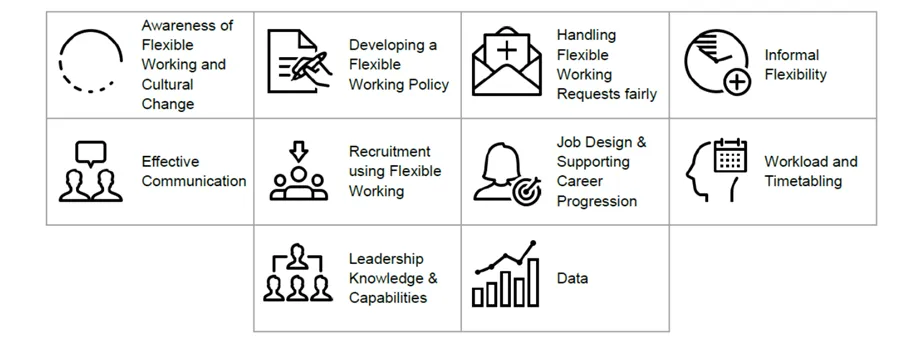
You can triangulate the results of the self-assessment with the baseline internal data and the Timewise maturity curve on flex (see below).
Baseline data
Schools and trusts are often rich with pupil data, but data poor when it comes to employees. To understand where you are now, consider collecting some baseline data such as number/percentage of total employees working flexibly before the strategy launches, broken down by type of flex (e.g. part-time, job share, phased retirement, compressed hours) or the number/percentage of formal and informal flexible working requests submitted vs approved over the last academic year. This will help you measure the eventual impact of your flexible working strategy.
Employee engagement and satisfaction
If you can access employee surveys prior to the strategy launching, review what percentage feel supported in requesting flex, or the number of positive responses around perceived work-life balance. Also review free text comments on flexibility: what do they think about the current policy? Do they feel comfortable asking for flex in various guises? If not, why not?
Retention
Again, if you have data to hand, consider feedback from focus groups, stay check-ins (short conversations used to learn what keeps an employee engaged and what motivates them to stay) and/or exit interviews to explore current attitudes and impact on voluntary turnover. Have employees left or not returned from maternity leave because of negative perceptions towards flex? If so, how many? What roles?
Recruitment
If your school or trust has used the phrase “happy to talk flexible working” in job adverts, what impact has this had on the volume (or quality) of new hires prior to your strategy launching?
Leadership training
Is your SLT trained on the different types of flex? Do they feel comfortable dealing with requests informally and formally (and how do you know)? Understanding this baseline is critical to shaping the priorities in your strategy. Remember flexible working comes in many guises (part-time, varied hours and in-year flexibility). Educate and train leaders and wider employees about other key types such as phased/flexible retirement. The DfE provides useful guidance, and you can view our range of webinars.
Timewise maturity curve
As well as obtaining baseline data, allow SLT time to reflect on current ‘attitudes’ towards flexible working in your school or Trust. Consider the data you have and deliberate together as an SLT on where you are now on the 5-point scale below - then agree on where you want to be over time. If you’re a Trust, do this as a central team and each individual school, as context is key.
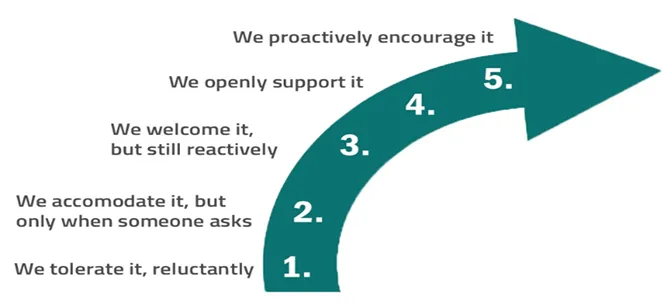
Source: Headteacher's Guide - Adopting a whole-school approach to flexible working
What is your vision for this work? (the why)
Once you’ve established the current status, establish your strategic vision (your Why). The benefits of flex are well known, but which ones are key priorities for your context? Is it about retaining more experienced employees? Recruiting from a broader pool of teachers? Reducing employee absence and improving work-life balance? Promoting equality of opportunity and diversity? Or all the above? Secondly, how will this vision align to your broader mission and values? How do you want employees to think and feel about your approach to flex over the coming years?
The how and the what
This is about your strategy and the operational action plan which underpins the strategy. If, for example, a priority is to increase the quality of applications received for STEM subjects by 2027, what actions will appear in your people plan to help achieve your agreed aims? You may include strategies such as advertising all roles with flexible options, utilising the free teaching vacancies job board or ensuring the careers page on your website contains positive testimonials from employees who work flexibly in your school. You can also consider providing training to SLT on flexible hiring. However, don’t forget any strategy will need clear measurables to evaluate its success. This could be as simple as the percentage of applications received for each role and the subsequent conversion to appointments.
If a strategic plan is already in place, ensure it aligns with your people strategy. And have clear communications plan, this should set out who needs to be communicated with, when and via what methods. This will give you the best chance of creating a sense of urgency and buy-in amongst stakeholders.
Once the strategy is in place, remember to keep it under review on a termly and annual basis and to celebrate successes with stakeholders.
Final thought
Fostering flexibility in the workplace makes good business sense. So, conduct a thorough audit, set out clear, measurable objectives, regularly review your people strategy, and give yourself the best chance of creating and embedding flexibility. But remember that culture change takes time. Be persistent, patient, and positive. Every small step will help support with recruitment and retention challenges in your setting.
Michelle Gabriel is Head of HR in Capita’s HR Advisory team for Schools, and programme sponsor for the DfE funded Flexible Working in Schools Ambassador Programme. For further information on how to develop a meaningful people strategy that includes flexible working, contact Michelle at michelle.gabriel@capita.com, and to access free resources and peer-to-peer support, go to www.flexibleworkingineducation.co.uk
Footnote 1 – (Cooper Gibson Research, 2019), (IFF Research, December 2021 and 2023), (Worth and McLean, NFER, 2022).